
Meridian Research Press is committed to maintaining fair, transparent, and independent editorial processes across all journals published under its imprint. The integrity of scholarly publishing depends on rigorous editorial oversight, objective peer evaluation, and ethical decision making. Our editorial policies are designed to ensure that all submissions are handled professionally, confidentially, and without bias.
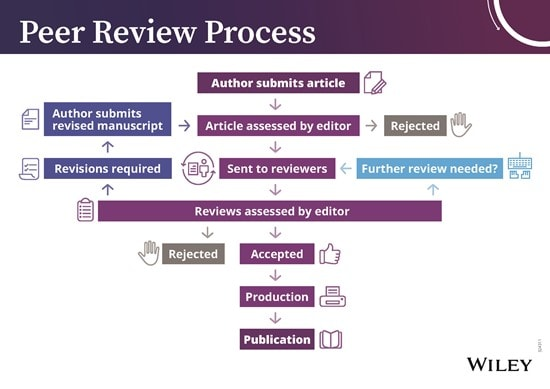
All manuscripts submitted to Meridian Research Press journals undergo a structured peer review process conducted by qualified subject experts. Peer review is a critical component of scholarly communication and serves to evaluate the originality, methodological soundness, clarity, and academic contribution of submitted work.
Depending on the specific journal, the review model may follow single blind review, double blind review, or open review, as stated in the respective journal guidelines. In single blind review, reviewers are aware of the authors’ identities while authors do not know the reviewers. In double blind review, both authors and reviewers remain anonymous. In open review, identities may be disclosed in accordance with journal policy.
Editors select reviewers based on expertise, research background, and relevance to the manuscript topic. Reviewers are expected to provide independent and unbiased assessments. The peer review process aims to improve manuscript quality through constructive feedback while ensuring that only research meeting scholarly standards is accepted for publication.
Manuscripts are evaluated based on originality, relevance to the journal’s scope, clarity of presentation, sound methodology, appropriate data analysis, ethical compliance, and overall contribution to the field. The editorial office ensures that the review process remains confidential and that reviewer identities are protected where anonymity applies.
Editors hold primary responsibility for maintaining the academic quality and integrity of their journals. They evaluate submissions based on scholarly merit, methodological rigor, theoretical contribution, clarity, and alignment with the aims and scope of the journal.
Editorial decisions are made independently and are not influenced by commercial interests, sponsorship, advertising considerations, or external pressure. Editors must avoid conflicts of interest and recuse themselves from handling manuscripts where impartiality could be compromised.
Editors are responsible for ensuring that the peer review process is conducted fairly, without discrimination based on nationality, gender, institutional affiliation, ethnicity, political beliefs, or personal characteristics. All manuscripts are assessed solely on academic merit.
Editors also oversee ethical compliance, including identifying potential plagiarism, duplicate submissions, data irregularities, or other forms of research misconduct. When ethical concerns arise, editors may request clarification, supporting documentation, or initiate further review in accordance with established policies.
Reviewers play a crucial role in maintaining the quality and credibility of published research. Reviewers are expected to provide objective, constructive, and timely evaluations of assigned manuscripts.
Reviewers must treat all submitted materials as confidential documents. Manuscripts may not be shared, discussed, or used for personal advantage. Information obtained during peer review must not be used in the reviewer’s own research prior to publication.
Reviewers must disclose any potential conflicts of interest that may affect their ability to provide an unbiased assessment. If a reviewer feels unqualified to review a manuscript or unable to provide a timely review, they should notify the editor promptly.
Feedback provided by reviewers should focus on improving the manuscript and should be professional and respectful. Personal criticism of authors is inappropriate. Reviewers are encouraged to identify relevant published work that has not been cited and to report any suspicion of ethical misconduct.
Authors are expected to cooperate fully with the editorial and peer review process. Submissions must be original, properly referenced, and conducted in accordance with ethical research standards.
Authors should respond to reviewer comments thoughtfully and provide clear explanations of revisions made. If authors disagree with specific reviewer comments, they should provide reasoned and evidence based responses.
Authors must not submit the same manuscript to multiple journals simultaneously. Any corrections identified after submission or publication must be communicated promptly to the editorial office.
Transparency in funding sources, conflicts of interest, ethical approvals, and data availability must be maintained throughout the review and publication process.
Editorial decisions are based on reviewer evaluations, the editor’s independent assessment, and the manuscript’s alignment with the journal’s scope and quality standards.
Possible decisions include acceptance, minor revision, major revision, or rejection. A decision of revision does not guarantee acceptance, as revised manuscripts may undergo further review before a final determination is made.
The editor’s decision is final and is guided by academic merit, originality, clarity, and relevance. All decisions are communicated clearly to authors along with reviewer comments where applicable.
Authors have the right to appeal editorial decisions if they believe a serious misunderstanding or procedural error occurred during the review process. Appeals must be submitted in writing and should include a detailed explanation supported by evidence.
Appeals are reviewed by the editor or, where appropriate, by a senior editorial authority or independent member of the editorial board. The appeals process is conducted impartially and transparently.
Complaints regarding editorial conduct, reviewer behavior, or conflicts of interest are handled seriously. Meridian Research Press investigates complaints objectively and takes corrective action when necessary to protect the integrity of the publication process.
Meridian Research Press fully respects the independence of editors and editorial boards. The publisher does not interfere with editorial judgments, peer review outcomes, or decisions regarding acceptance or rejection of manuscripts.
Editorial independence ensures that decisions are based solely on scholarly merit and ethical considerations. Commercial interests, advertising, sponsorship, or financial considerations do not influence editorial processes.
Maintaining independent editorial oversight is fundamental to preserving trust, credibility, and academic integrity across all journals published by Meridian Research Press.